Insulation & air sealing
Air Sealing Your Home: Find Leaks, Seal Them and Stay Safe
Where homes leak air, how to find leaks, what a blower door test shows, DIY caulk and weatherstripping, attic bypasses, and combustion safety.
Topics
Short answer
Energy-efficient windows can cut household energy bills by up to 13% when they replace single-pane windows, but they cost a lot and pay back slowly. If your windows are sound, low-e storm windows, weatherstripping and caulk often save more per dollar. Replace windows that are rotted, broken or painted shut, and pick ENERGY STAR models rated for your climate zone.

Energy-efficient windows can make a home quieter, less drafty and cheaper to heat and cool. But they are one of the most expensive energy upgrades, and the savings alone rarely pay for them quickly. This guide explains how to read window ratings, what ENERGY STAR requires in your climate, honest payback math, and when repair or low-e storm windows are the smarter buy.
Replace windows that are rotted, broken, fogged between panes, or painted or swollen shut. If the frames and sashes are sound, repair them and add weatherstripping, caulk or low-e storm windows instead. ENERGY STAR says storm windows cost about one-quarter to one-half as much as common replacement windows, with much lower installation costs.
Here is a quick way to compare your options. Savings and costs are from ENERGY STAR and DOE where noted; your results will vary with climate, home and energy prices.
| Option | Typical cost (official estimate where available) | Energy impact | Best for |
|---|---|---|---|
| Caulk, weatherstripping, film kits | Under $100 for a DIY project (ENERGY STAR) | Cuts drafts and air leaks | Every home; renters; a first step |
| Repair sashes and glazing | Varies; get 3 quotes | Restores a tight fit | Solid older wood windows |
| ENERGY STAR low-e storm windows | About 1/4 to 1/2 the cost of replacement windows (ENERGY STAR) | About $350/year, roughly 10% of heating and cooling, over single-pane (EPA) | Sound single-pane windows, historic homes |
| ENERGY STAR replacement windows | About $400 to $1,600+ per window (ENERGY STAR) | Up to 13% lower household energy bills vs. single-pane (ENERGY STAR) | Failing windows, major remodels |
Start with the cheap fixes no matter what. Our guide to sealing air leaks covers caulk and weatherstripping, and a home energy audit can show whether your windows are really the biggest problem. In many homes, the attic and basement leak far more air than the windows.
The National Fenestration Rating Council (NFRC) label shows tested energy ratings for a specific window. The two that matter most are U-factor, which shows how well the window keeps heat in, and solar heat gain coefficient (SHGC), which shows how much of the sun’s heat gets through. Lower is better for both in most cases.
NFRC lists five ratings that may appear on its label:
| NFRC rating | What it measures | Typical range | What to look for |
|---|---|---|---|
| U-factor | How well the window keeps heat from escaping | 0.20–1.20 | Lower is better, especially in cold climates |
| Solar heat gain coefficient (SHGC) | How much solar heat gets through | 0–1 | Low in hot climates; higher can help in cold, sunny ones |
| Visible transmittance (VT) | How much daylight gets through | 0–1 | Higher means more natural light |
| Air leakage | How much air passes through the unit | 0.3 or less | Lower is tighter |
| Condensation resistance | Resistance to interior condensation | No set range | Higher is better |
The NFRC label rates the window unit as built. It does not cover leaks between the window frame and your wall, which depend on how carefully it is installed.
ENERGY STAR splits the country into four window zones: Northern, North-Central, South-Central and Southern. Each has maximum U-factor and SHGC limits, and all certified windows must have air leakage of 0.3 cubic feet per minute per square foot or less. Products must also be independently tested and certified by NFRC.
These are the current ENERGY STAR criteria for residential windows (ENERGY STAR criteria tables dated October 2023, accessed October 2026):
| ENERGY STAR zone | U-factor | SHGC |
|---|---|---|
| Northern | 0.22 or lower | 0.17 or higher |
| Northern (equivalent performance option) | 0.23–0.24 | 0.35 or higher |
| Northern (equivalent performance option) | 0.25–0.26 | 0.40 or higher |
| North-Central | 0.25 or lower | 0.40 or lower |
| South-Central | 0.28 or lower | 0.23 or lower |
| Southern | 0.32 or lower | 0.23 or lower |
In the North, ENERGY STAR allows a slightly higher U-factor if the window lets in more free solar heat in winter. In the South, the low SHGC limit matters most, because keeping out the sun’s heat cuts air conditioning use. ENERGY STAR’s window zones are not the same as the eight climate zones used for insulation, so look up your window zone separately on the ENERGY STAR criteria page.
ENERGY STAR does not require any specific technology, so certified windows come in vinyl, wood, fiberglass, composite and aluminum frames. Double- or triple-pane glass, low-e coatings, gas fills between panes and insulated spacers all help a window hit its rating. Rather than comparing features, compare the NFRC numbers for the size and style you need.
ENERGY STAR says certified windows lower household energy bills by an average of up to 13% nationwide when they replace single-pane windows. Savings are much smaller when you replace double-pane windows. With replacement windows starting around $400 each and often costing far more, the energy payback usually takes decades.
ENERGY STAR’s Home Upgrade page estimates replacements start at about $400 per window for a simple, energy-efficient 3 ft by 5 ft double-hung window, and premium options can reach about $1,600 per window or more. Installation complexity, custom sizes, trim repair and lead-safe work in older homes all push costs up.
Here is a simple, hypothetical calculation to show the math. It is an illustration, not a prediction for your home.
That is why ENERGY STAR advises getting quotes from several installers and why replacement makes most sense when windows need replacing anyway. Comfort, noise, safety and appearance are real benefits too; just don’t buy windows expecting them to pay for themselves fast. Ask each installer for a written quote listing each window’s U-factor and SHGC.
For many homes with sound single-pane windows, yes. EPA estimates ENERGY STAR low-e storm windows installed over single-pane glass with no existing storms save about $350 a year in heating and cooling, roughly 10% nationally. ENERGY STAR expects the extra cost over non-certified storms to pay back in about three years.
A storm window is a second window mounted on the inside or outside of your existing one. It adds a layer of glass and a still air space and blocks drafts. ENERGY STAR certified storm windows use low-e glass and must meet emissivity, solar transmittance and air leakage limits for their climate zone under a specification that took effect September 5, 2018.
Key facts from ENERGY STAR and DOE:
Storm windows are a good fit for historic homes, for owners who want to keep original wood windows, and for budgets that cannot stretch to full replacement. Interior storms can also suit renters, with the landlord’s permission.
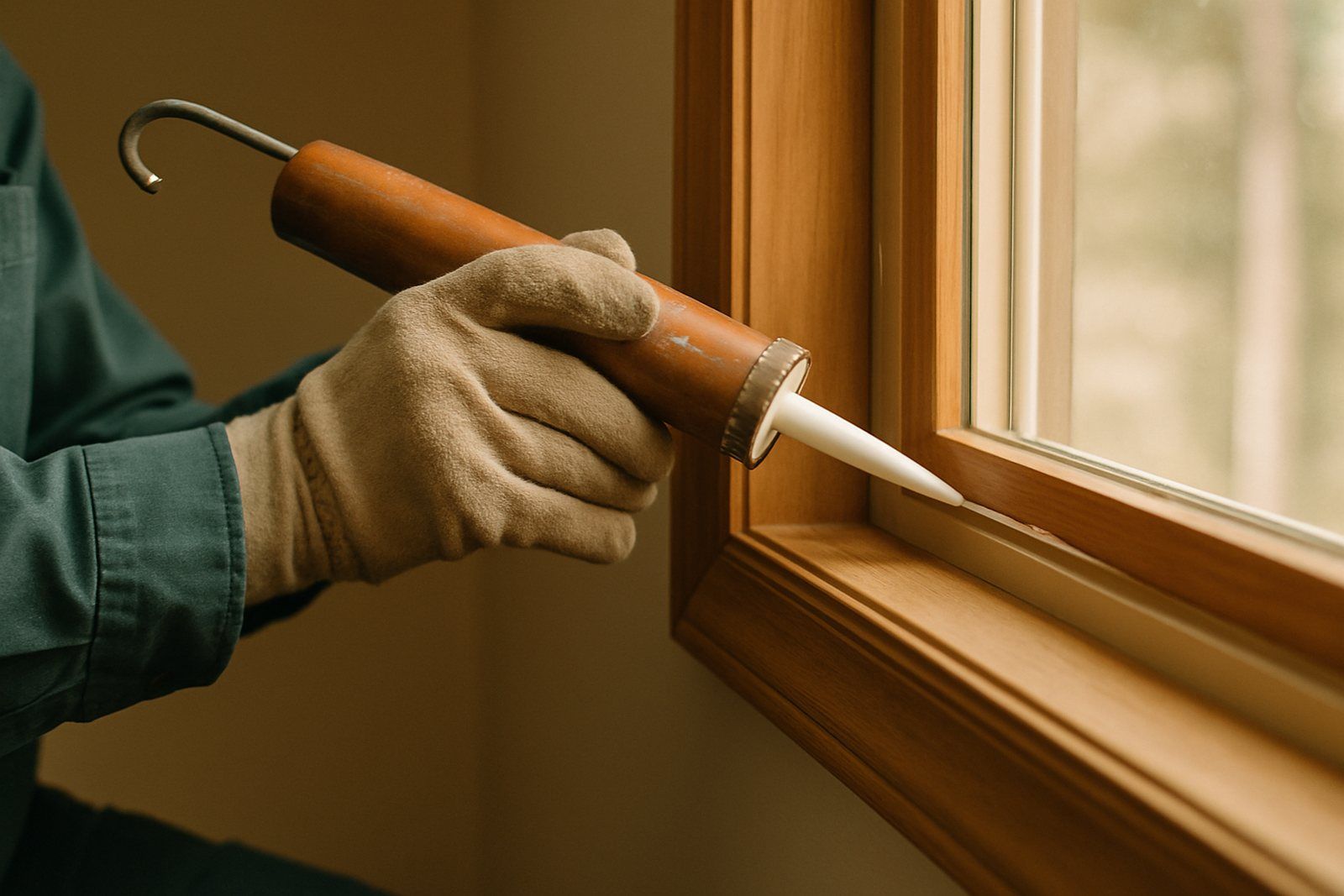
Caulking, weatherstripping and plastic window film kits are the cheapest window upgrades. ENERGY STAR rates window film as an easy one-day DIY project under $100. Caulking and sealing around window and door trim is a moderate-to-difficult DIY job. These steps cut drafts right away and make any later storm window or replacement work better.
In homes built before 1978, painted window parts may contain lead. EPA’s Renovation, Repair and Painting rule requires contractors paid to disturb painted surfaces in those homes to be certified in lead-safe work practices. If you do the work yourself, avoid dry sanding and scraping and follow EPA’s lead-safe guidance.
A good exterior door matters less for energy than the windows or attic, but a tight seal helps comfort. ENERGY STAR certifies doors based on how much glass they have. Solid doors without glass must have a U-factor of 0.17 or lower, and doors with more glass have limits that vary by climate zone.
ENERGY STAR door criteria (tables dated October 2023):
Before replacing a door, try new weatherstripping, an adjustable threshold and a door sweep. Those fixes cost little and often stop most of the draft.
There is no federal tax credit for windows, skylights or doors installed in 2026. The 25C Energy Efficient Home Improvement Credit does not apply to property placed in service after December 31, 2025, under Public Law 119-21. Some utilities offer window or storm window rebates, so check locally.
If your windows or doors were placed in service in 2025, you may still claim 25C on your 2025 return using Form 5695: 30% of the cost, up to $600 for windows and skylights and $250 per exterior door ($500 total for doors), within the $1,200 annual general limit. ENERGY STAR notes exterior windows and skylights had to meet its Most Efficient criteria, and the IRS required a qualified manufacturer identification number for property placed in service in 2025. Confirm details with the IRS or a tax professional, and see our 2026 guide to energy tax credits.
State Home Energy Rebates programs focus on whole-home savings, insulation, air sealing and electric appliances, and windows are not on the HEEHR appliance rebate list. HOMES programs reward modeled or measured whole-home savings, so check your state’s rules in our state-by-state rebate guide before assuming windows count.
Energy-efficient windows are worth buying when your old ones are failing, and ENERGY STAR models rated for your zone are the right choice when you do. But on energy savings alone, they pay back slowly. For sound windows, caulk, weatherstripping and low-e storm windows usually deliver more savings per dollar. For a ranked list of upgrades that pay off faster, see our guide to lowering your energy bill.
Usually not on energy savings alone. New windows cost hundreds to well over a thousand dollars each, and the yearly savings are modest, so payback can take decades. They make more sense when your windows are failing anyway, are single-pane, or when you value comfort, quiet and easier cleaning. For sound windows, low-e storm windows, weatherstripping and caulk usually save more per dollar spent.
It depends on your climate. ENERGY STAR requires a U-factor of 0.22 or lower in its Northern zone, 0.25 or lower in North-Central, 0.28 or lower in South-Central and 0.32 or lower in Southern. Lower is better for keeping heat in. Find your zone with the ENERGY STAR product finder and check the U-factor on the NFRC label of each window you consider.
Low-e stands for low emissivity. It is a microscopically thin, nearly invisible coating on the glass that reflects heat. In cold climates it helps keep indoor heat inside. In hot climates, coatings tuned for low solar heat gain block much of the sun's heat while letting visible light through. Most ENERGY STAR certified windows use low-e coatings, and ENERGY STAR storm windows must have low-e glass.
Both can be ENERGY STAR certified, and both add an extra layer of glass and a sealed air space. Interior storms are easier to install and remove, work well in apartments and on upper floors, and do not change the outside look of a historic home. Exterior storms also protect the primary window from weather but must have weep holes or similar features so moisture can drain.
Often, yes, if the frames and sashes are solid. Repairing broken glass, re-glazing, freeing stuck sashes, adding weatherstripping and caulking the trim can make old windows much tighter at low cost. Adding a low-e storm window on top brings performance close to a new double-pane window. In homes built before 1978, painted surfaces may contain lead, so hire a lead-safe certified contractor.
It measures how much outside air passes through the window unit itself, in cubic feet per minute per square foot of window. Lower numbers mean a tighter window. ENERGY STAR windows must have an air leakage rating of 0.3 or lower. Keep in mind that leaks around the frame, between the window and the wall, depend on installation quality, not the label.
Yes, for little money. Clear plastic film kits stick to the window frame and are shrunk tight with a hair dryer, creating a still air layer that cuts drafts and heat loss through single-pane glass. ENERGY STAR rates it an easy, one-day DIY project that costs under $100. They are a good stopgap for renters and for winters before you decide on storm windows.
Possibly. For windows and skylights placed in service in 2025, the 25C credit was 30% of the cost up to $600, and up to $250 per exterior door with a $500 total for doors, within a $1,200 annual limit. You claim it on your 2025 return using Form 5695. Product requirements and identification numbers applied, so confirm with the IRS or a tax professional.
ENERGY STAR uses four window climate zones: Northern, North-Central, South-Central and Southern. These are different from the eight insulation climate zones. The ENERGY STAR criteria page shows a map, and the ENERGY STAR product finder lets you search by location. Each certified window's label also shows which zones it qualifies for, so check that your zone is highlighted before you buy.
Where homes leak air, how to find leaks, what a blower door test shows, DIY caulk and weatherstripping, attic bypasses, and combustion safety.
How much attic insulation you need by climate zone, how to check what you have, which material to choose, DIY vs pro, and why to air seal first.

How to get help paying your energy bills in 2026: LIHEAP, free weatherization, utility payment plans, budget billing, shutoff protections and how to apply.