Heating & cooling
Heat Pumps for Your Home: Cost, Savings and How to Choose
What a heat pump costs to run in 2026, how much it can save versus a furnace, AC or baseboard heat, how to read SEER2 and HSPF2, and what help is left.
Topics
Short answer
A heat pump water heater moves heat from the surrounding air into the tank instead of making heat with an element. ENERGY STAR estimates a certified model saves a household of four about $550 a year compared with a standard electric water heater, with the higher upfront cost paid back in about three years.
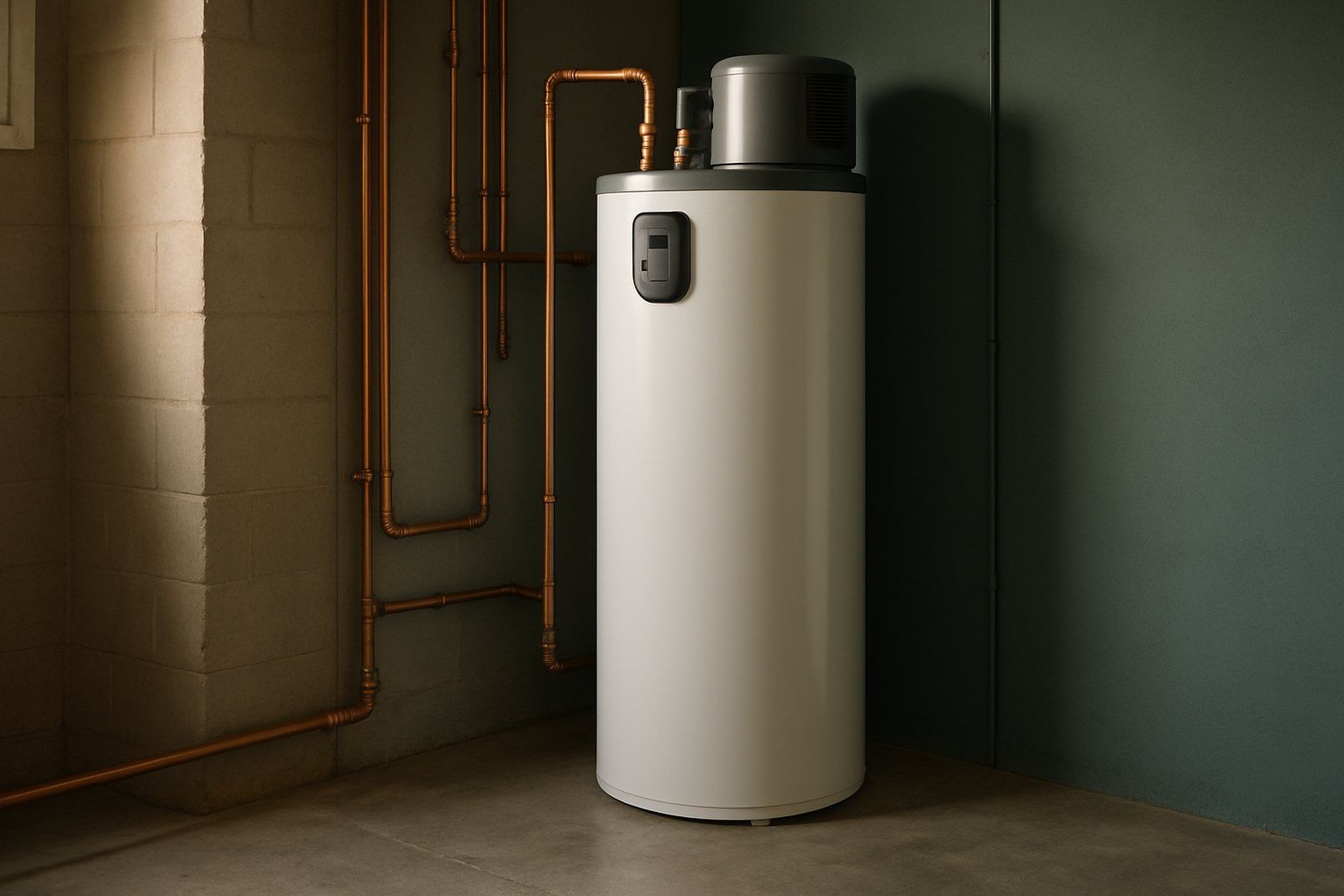
A heat pump water heater is one of the simplest ways to cut a large, often overlooked part of your energy bill. The Department of Energy says water heating accounts for nearly 20% of the average home’s energy use and is typically the second-largest energy expense after heating and cooling. This guide covers how much you can save, how to size and place the unit, what installation involves, and how it compares with gas and tankless options.
A heat pump water heater works like a refrigerator in reverse. A small compressor and fan pull heat from the surrounding air and move it into the water tank. Because it moves heat instead of making it, it uses far less electricity than a standard electric tank. Most models also have backup electric elements for busy times.
ENERGY STAR calls these units “hybrid” water heaters because they switch to standard electric resistance heat automatically during periods of high hot water demand. Most have a control panel with several modes:
ENERGY STAR estimates a certified heat pump water heater saves a household of four about $550 a year compared with a standard electric water heater, and more than $5,610 over its life. Smaller households save less because they use less hot water. Savings versus gas depend on local gas and electricity prices.
Here is ENERGY STAR’s savings table, which assumes electricity at 14.6 cents per kWh, an extra purchase cost of $1,503 over a standard electric model, and a 13-year life:
| Household size | Electricity saved per year | Dollars saved per year | Payback on extra cost | Lifetime savings |
|---|---|---|---|---|
| 2 people | 1,880 kWh | $270 | 5.5 years | $2,050 |
| 3 people | 2,820 kWh | $410 | 3.7 years | $3,830 |
| 4 people | 3,760 kWh | $550 | 2.7 years | $5,610 |
Source: ENERGY STAR, Savings and Benefits, checked October 2026.
Electricity now costs more than that 14.6-cent assumption in much of the country. The U.S. average residential price was 17.30 cents per kWh in 2025 (EIA, annual average for 2025). At higher electric rates, every kWh saved is worth more, so the dollar savings for an electric-to-heat-pump swap tend to grow. To check your own case, multiply the kWh savings for your household size by the rate on your bill.
The math is less clear-cut when you replace gas. Your gas bill drops, but your electric bill rises. Whether you come out ahead depends on your local gas and electric rates. ENERGY STAR says heat pump water heaters use up to 70% less energy than traditional gas systems, and they also remove a combustion appliance from your home. Ask your installer to estimate annual operating costs for both options using your actual rates.
Size a heat pump water heater by your busiest hour of hot water use, not just by tank gallons. Look for a first hour rating (FHR) that covers that peak hour. Because heat pumps recover more slowly than gas burners in efficiency mode, ENERGY STAR advises sizing up one step when you switch from a gas tank.
A simple sizing process:
Heat pump water heater tanks typically range from 40 to 80 gallons, according to ENERGY STAR. Larger tanks cost more, but ENERGY STAR cautions against choosing a tank size based on price alone, since an undersized unit will lean on its less efficient electric elements.
A heat pump water heater needs a space that stays between 40°F and 90°F year-round, enough surrounding air to draw heat from, a place to drain condensate, and room for service. Basements, garages in mild climates and large utility rooms are common choices. Small closets may need a louvered door or a duct kit.
ENERGY STAR’s product page suggests providing about 1,000 cubic feet of air space around the unit. Its installation cost article gives a minimum of at least 450 cubic feet, roughly an 8-by-8-foot utility closet, and adds that some manufacturers require more. Follow the installation manual for the specific model you buy.
Other placement points to plan for:
Most heat pump water heaters run on a 240-volt circuit, like a standard electric water heater. ENERGY STAR also certifies 120-volt models designed for a 15-amp circuit, often called plug-in models. They can make a gas-to-electric switch easier, but they have a lower efficiency bar and may recover more slowly.
ENERGY STAR’s water heater criteria show the difference. A standard integrated heat pump water heater must reach a UEF of at least 3.30. An integrated model on a 120-volt, 15-amp circuit, and split-system models, must reach at least 2.20.
| Option | Typical electrical need | ENERGY STAR minimum UEF | Good fit for |
|---|---|---|---|
| Integrated, 240-volt | Dedicated 240-volt circuit | 3.30 | Replacing an electric tank; homes with panel space |
| Integrated, 120-volt / 15-amp | Standard 120-volt outlet circuit | 2.20 | Replacing gas where adding a 240-volt circuit is hard |
| Split system | Varies by model | 2.20 | Tight indoor spaces or very cold locations |
| Standard electric tank | 240-volt circuit | Not ENERGY STAR eligible | Lowest upfront price, highest operating cost |
Source: ENERGY STAR Water Heater Key Product Criteria, checked October 2026.
If you replace a gas water heater with a 240-volt model, ENERGY STAR notes you may need extra breaker panel capacity and a new circuit run to the water heater location. The installer should also cap the gas line and seal the old vent opening, which reduces air leaks.
ENERGY STAR reports the unit itself typically costs $1,500 to $3,000 before incentives, with split models costing several times more. An informal contractor survey it cited put labor and materials at $1,000 to $3,000 on top of the unit. A rough rule is that installation costs about as much as the water heater.
These are national rough ranges published by ENERGY STAR in 2024, so get at least three written quotes for your home. Costs rise when you need:
Lifespan helps the math. ENERGY STAR says heat pump water heaters are typically cited as lasting 13 to 15 years, compared with 10 to 12 years for traditional storage water heaters.
A heat pump water heater has the highest efficiency rating of common options and usually the lowest operating cost compared with standard electric tanks. Gas storage and gas tankless models cost less to buy in many cases but burn fuel and need venting. Your best choice depends on fuel prices, space and hot water needs.
| Type | ENERGY STAR minimum UEF | Needs venting? | Notes |
|---|---|---|---|
| Heat pump (integrated, 240-volt) | 3.30 | No | Needs air space and condensate drain |
| Gas storage, 20 to 55 gallons | 0.81 (medium use) or 0.86 (high use) | Yes | Fast recovery; combustion appliance |
| Gas tankless | 0.95 | Yes | Endless hot water up to its flow limit; no tank losses |
| Standard electric storage | Not ENERGY STAR eligible | No | UEF around 0.93 per ENERGY STAR |
Source: ENERGY STAR Water Heater Key Product Criteria and Uniform Energy Factor guidance, checked October 2026. UEF compares models within the same usage category, so compare similar sizes.
Federal standards are also moving toward heat pumps. A DOE final rule published in 2024 requires compliance with new consumer water heater standards on and after May 6, 2029, and DOE said most new electric storage water heaters would need heat pump technology, except small units (DOE Consumer Water Heaters). Rules can change, so check that page for updates. If you want to see how water heating fits with other savings, our guide to lowering your energy bill ranks upgrades by cost.
There is no federal tax credit for heat pump water heaters installed in 2026. The 25C credit ended for property placed in service after December 31, 2025. Utility rebates remain common, and some states offer Home Energy Rebates, but those state rebates no longer fund switching from gas to electric.
Under Public Law 119-21, the IRS says the Energy Efficient Home Improvement Credit (25C) is not allowed for property placed in service after December 31, 2025. If your heat pump water heater was placed in service in 2025, you may still claim up to $2,000 on your 2025 return using Form 5695, with the manufacturer’s Qualified Manufacturer ID. Our 2026 energy tax credit guide explains the dates. Confirm your situation with a tax professional.
Under the original law, the High-Efficiency Electric Home Rebate (HEEHR) set a statutory maximum of $1,750 for a heat pump water heater for low- and moderate-income households. Your state’s program sets the actual amounts. Since DOE Program Notice 26-2 took effect on May 29, 2026, these rebates no longer fund switching from gas, oil or propane to electric, and households must address insulation and air sealing first unless already insulated to a state-set level. See our state rebate guide and your state energy office for current status.
Many electric utilities run their own heat pump water heater rebates or instant discounts. ENERGY STAR reported in 2024 that these often ranged from $300 to $1,000. You can search by ZIP code on DSIRE. Confirm eligibility, installer requirements and deadlines with the program before you buy.
A heat pump water heater can cut water heating costs sharply, especially if you have a standard electric tank today. Measure your space and its temperature, size by first hour rating, plan the electrical and condensate work, and get three written quotes. With the federal credit gone for 2026, check your utility and state programs before you buy. For heating and cooling, our heat pump cost and savings guide applies the same technology to your whole home.
It cools the space a little, because it pulls heat from the surrounding air. ENERGY STAR cites a 2022 field study of 81 homes with basement units that found an average room temperature drop of about 2.3°F, and most homeowners did not notice. In summer that cooling and drying can be a bonus in a basement. In a small closet, a louvered door or a duct kit helps the unit get enough air.
ENERGY STAR says heat pump water heaters are typically cited as lasting 13 to 15 years, compared with about 10 to 12 years for a traditional storage water heater. Its savings estimates assume a 13-year life. Check the warranty, since ENERGY STAR certified models must carry at least a six-year warranty on the sealed system. Flushing the tank and cleaning the air filter as the manual describes helps the unit last.
Often yes, if the garage stays between about 40°F and 90°F most of the year. In a garage that drops below that range for long stretches, the unit will rely more on its backup electric elements and save less. Split models with an outdoor compressor, which ENERGY STAR says can work down to -25°F, are another option for cold garages or tight spaces. Ask your installer about your winter garage temperatures.
It makes a steady hum when the compressor and fan run. ENERGY STAR says most new models run between 45 and 60 decibels, roughly from a quiet kitchen refrigerator to a modern window air conditioner. That is usually fine in a basement, garage or utility room. Avoid placing it right next to a bedroom, and ask about sound reduction kits if the unit will sit near living space.
Start with your busiest hour of hot water use, such as back-to-back morning showers plus a dishwasher, and choose a model whose first hour rating covers it. Heat pump water heaters recover more slowly in efficiency mode than gas tanks, so ENERGY STAR advises sizing up when replacing gas, for example from 40 to 50 gallons or 50 to 65 gallons. Larger households usually need 65 or 80 gallons.
It is possible for skilled DIYers, but most homeowners should hire a licensed plumber or electrician. The job involves water lines, a condensate drain, often a new 240-volt circuit and sometimes a permit. Many local codes and utility rebate programs also require a permit, a licensed installer or a thermostatic mixing valve. Some rebates and warranties require professional installation, so read the terms first.
Most units offer several modes. Efficiency or economy mode uses only the heat pump and saves the most energy. Hybrid or auto mode, the usual default, uses the heat pump first and adds the electric elements when demand is high. Electric mode uses only the elements and is the least efficient. Vacation mode keeps the tank from heating while you are away. Hybrid works well for most households.
Possibly through your utility, but not usually through the state Home Energy Rebates anymore. Since DOE Program Notice 26-2 took effect on May 29, 2026, those state-run rebates no longer fund switching from gas, oil or propane to electric appliances. Many utilities run their own water heater programs with different rules. Search your ZIP code on DSIRE and confirm terms with the program before buying.
Yes. ENERGY STAR says they work efficiently even in cold climates as long as the surrounding air stays at or above about 40°F, which most basements in places like Maine meet. Below the compressor's limit, the unit switches to its electric elements and keeps making hot water, just less efficiently. Colder incoming water in winter also means slightly more energy use in those months.
What a heat pump costs to run in 2026, how much it can save versus a furnace, AC or baseboard heat, how to read SEER2 and HSPF2, and what help is left.
How cold-climate heat pumps perform below freezing, what the ENERGY STAR cold-climate label requires at 5°F, how to use the NEEP list and plan backup heat.

Which states have launched federal Home Energy Rebates (HOMES and HEAR), what DOE Notice 26-2 changed in 2026, and how to apply in your state.